My Mum’s 1990s Wardrobe Is Still Styling Me in 2026 — Five Pieces Worth Keeping
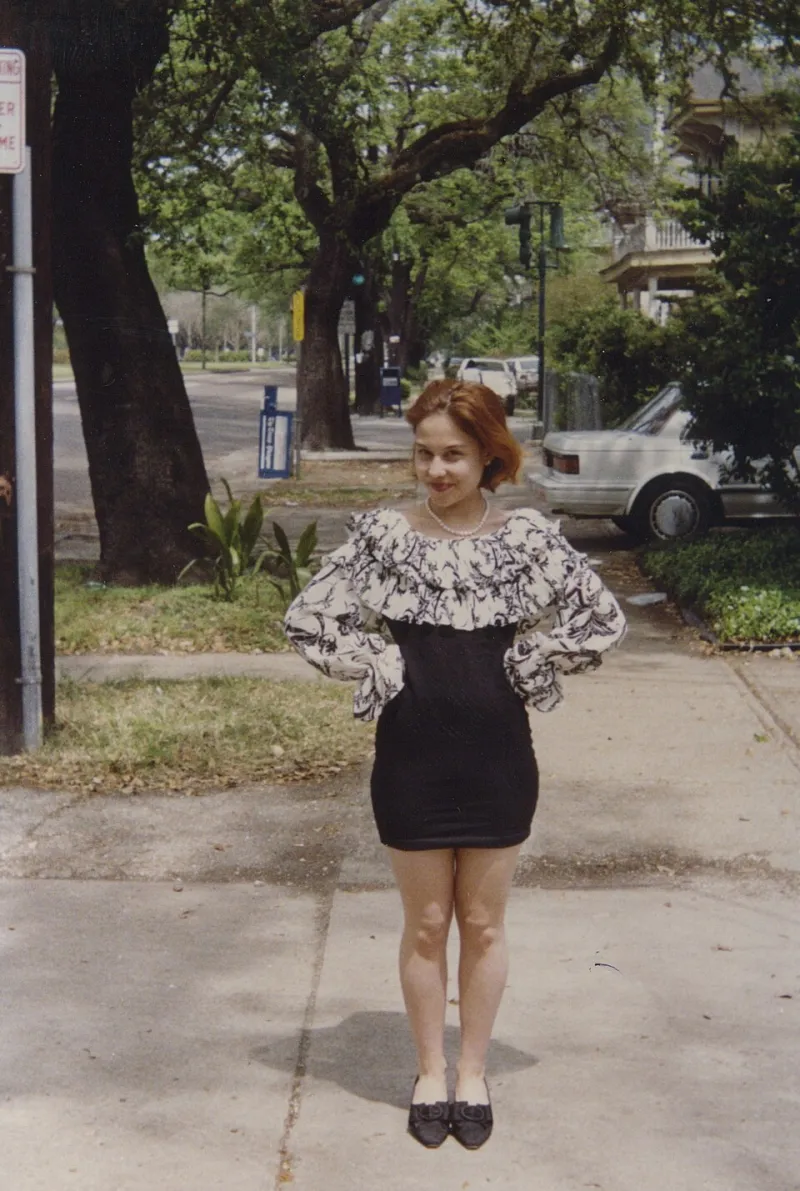
Photo: Infrogmation of New Orleans, CC BY-SA 2.0, via Wikimedia Commons
The bin bag on the spare bed
My mum is not sentimental about clothes. She is the woman who once donated a suede coat because it made her look like a geography teacher. So when she handed me a bin bag last spring and said, you might want some of this before it goes to the charity shop, I expected a few novelty scarves and a pair of bootcut jeans that smelled of 1998.
Instead, I found a small time capsule. A cropped leather jacket. A navy bias-cut slip dress. A pair of high-waisted straight-leg jeans. An oversized grey wool blazer with shoulder pads. A fine-knit Breton stripe top. All of them had been worn, mended, and worn again. None of them were in perfect condition. That, it turns out, was the point.
I laid them on the spare bed and photographed each one — not for Instagram, but because I wanted to look properly. I wanted to see what my mum knew about getting dressed before the algorithm had an opinion. And I wanted to work out which of these pieces could live in my 2026 wardrobe without turning me into a tribute act.
The leather jacket: boxy, not biker
The jacket is black, cropped at the waist, with a collar rather than a zip and no hardware to speak of. My mum bought it in 1994 from a market stall in Manchester. It has a crease across the back that no amount of conditioning will shift. I love it.
What it taught me: a leather jacket does not have to be a moto jacket. The boxy shape is easier to wear than the classic biker because it sits away from the body and leaves room for a jumper. In 2026, I wear it with wide-leg jeans, a plain white tee and flat ballet pumps. For evenings, I swap the tee for a slip dress and add a small shoulder bag. The jacket does the heavy lifting; everything else stays quiet.
Would I have bought this new? Probably not. It is not the right leather jacket for my body according to any shopping quiz. But it has become one of my signatures. That is the thing about inherited clothes: they can shortcut you to a version of yourself you would not have picked off a rail.
The slip dress: a layering piece, not a costume
The navy slip dress is bias-cut, mid-calf, with thin straps and a slightly sheer finish. My mum wore it to dinners in 1996 with a cardigan and red lipstick. I have worn it exactly zero times like that.
What it taught me: occasion clothes are a trap if they only work for occasions. I wear the slip dress over a white T-shirt with chunky boots and a wool coat. In summer, I wear it alone with flat sandals and a basket bag. In winter, it goes under an oversized jumper with thick tights. The fabric is the point — that heavy, liquid drape is hard to find on the high street now.
It is also the piece that made me think hardest about emotional attachment. I do not look like my mum in it. I do not want to. But I like that it carries her handwriting — literally, there is a small repair at the hem in her stitch. Sustainable style is often framed as a maths problem: cost per wear, carbon footprint, capsule counts. This dress is not a maths problem. It is a memory I can wear.
The jeans: the honest workhorse
They are high-waisted, straight-leg, rigid denim, with a waist that sits above my belly button and a hem that grazes my ankle. My mum wore them with a cropped jumper and trainers. I wear them with a fitted knit, a blazer and loafers, or with a big shirt and sandals.
What it taught me: fit is not the same as fashion. These jeans are not flattering in the way a stretchy skinny jean is flattering. They are honest. They hold you in, they crease when you sit, and they make you stand differently. In 2026, with denim shapes changing every five minutes, that is oddly freeing. A straight leg is not a trend; it is a shape that works if you get the rise and the length right.
I had them taken in at the waist by a local tailor for £18. That is the other lesson: inherited clothes are rarely perfect off the hanger. A small alteration can turn a maybe into a favourite. My mum is shorter than me, so the hem was already right. The waist was not. Now they fit like they were made for me, which, in a way, they were.
The blazer: shoulders with a story
The grey wool blazer is oversized, with soft shoulder pads and a single-breasted cut. My mum wore it to job interviews in 1997. I wore it to a meeting last Tuesday with leggings and a striped top, which would probably have horrified her.
What it taught me: a good blazer is a mood, not a uniform. The shoulder pads give it a bit of authority, but the wool is soft enough that it does not feel like armour. I keep the pads in. I tried removing them once and the jacket lost its nerve. In 2026, I wear it belted with a midi skirt, or open over a slip dress, or with straight jeans and a plain white tee. It is the piece that makes a very ordinary outfit look like I meant it.
It also taught me to ignore the age-appropriate rule. My mum was in her twenties when she bought it. I am in my thirties. The blazer has been through two recessions, three jobs and one bad perm. It does not care what decade it is.
The Breton top: the quiet signature
The last piece is a fine-gauge navy-and-cream striped top with a boat neck. It is not valuable. It is not rare. It is the piece I wear most.
What it taught me: personal style is often built from repeats, not statements. My mum wore this top with jeans, with a skirt, under a blazer, on the beach. I do the same. It is the thing I reach for when I have nothing to wear, which means it is the thing that actually defines my wardrobe. In 2026, I wear it with a satin midi skirt and trainers, or with wide-leg trousers and a trench. It works because it is simple and because it fits properly across the shoulders.
What I am keeping, and what I am not
I did not keep everything. There was a pair of low-rise bootcuts that made me feel like I was wearing a costume, and a beaded cardigan that shed everywhere. The five pieces I kept are not a capsule wardrobe. They are a conversation with a woman who dressed before sustainability was a marketing term, and who bought things to wear, not to post.
The biggest lesson is not shop second-hand or wear your mum's clothes. It is that personal style is built slowly, from things that have a reason to stay. In 2026, with trend cycles moving faster than ever, that feels like the most useful thing I own.
I still have the bin bag. It is in the loft, waiting for the next charity shop run. But these five pieces are staying. Not because they are vintage, and not because they are free. Because they fit the life I actually have.